What is UTP Network Cable?
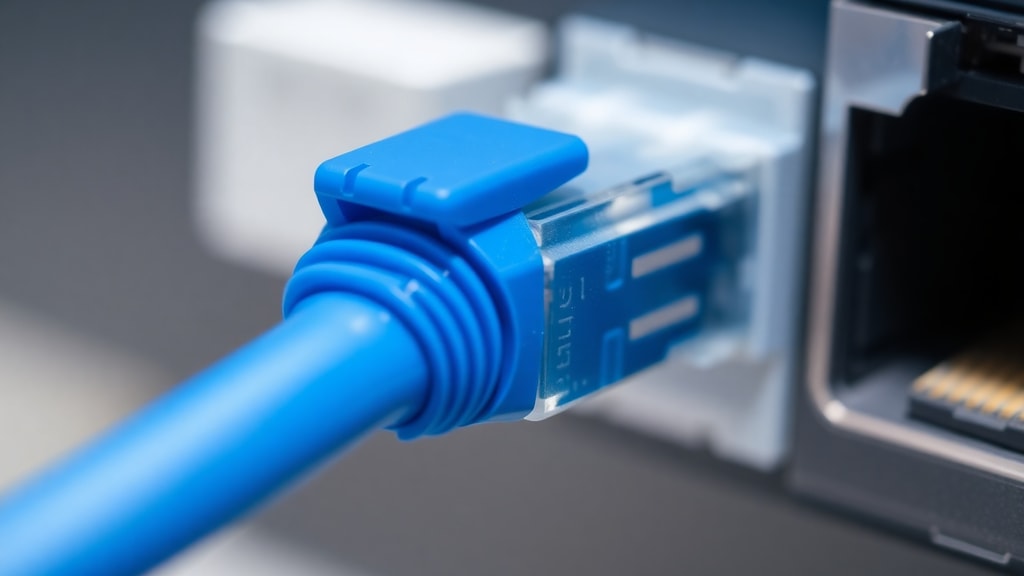
Unshielded Twisted Pair, commonly referred to as UTP, is the most widely used copper cabling standard for Ethernet networks. It consists of four pairs of color-coded copper wires, each pair twisted around the other at a specific rate, all enclosed in a flexible plastic jacket typically made from PVC. Unlike shielded cables, UTP has no metallic foil or braided shielding surrounding the individual pairs or the entire bundle. This simple construction makes UTP lightweight, affordable, and easy to install, which has contributed to its dominance in home and office networking environments. The cable is designed to carry data signals using differential signaling, where each wire in a pair carries a signal that is the exact opposite of the other, allowing the receiver to cancel out noise. UTP cables are terminated with RJ45 connectors and form the backbone of local area networks (LANs) around the world.
How Twisted Pairs Reduce Interference
The core innovation of UTP cable lies in its twisted wire pairs. The twisting creates a balanced transmission line that helps cancel electromagnetic interference (EMI) and crosstalk. Crosstalk occurs when signals from one wire pair leak into another pair, degrading data integrity. By twisting the wires at different rates for each pair, the cable ensures that any interference induced in one wire is mirrored in its partner, allowing the receiving device to subtract the noise. This effect is known as common-mode rejection and does not require a ground connection, making UTP ideal for environments where grounding is inconsistent. The standard impedance for UTP cables is 100 ohms, which matches the impedance of most Ethernet network interfaces. This matching minimizes signal reflections and ensures efficient power transfer across the cable length. For reliable performance, UTP must be installed away from strong sources of magnetic fields, such as large electric motors, fluorescent lighting ballasts, and heavy industrial transformers, because the lack of shielding makes it more susceptible to external interference in high-EMI environments.
Categories and Performance Specifications
UTP cables are classified into several categories based on their frequency rating and maximum data throughput. The most common categories for modern Ethernet networks are Cat5e, Cat6, and Cat6a. Higher categories use tighter twisting tolerances, better insulation materials, and sometimes a physical separator to reduce crosstalk and support higher frequencies. Below is a table summarizing the key specifications of these UTP categories.
| Category | Maximum Data Rate | Frequency Bandwidth | Typical Maximum Length | Common Applications |
|---|---|---|---|---|
| Cat5e | 1 Gbps | 100 MHz | 100 meters | Home networks, basic VoIP, Gigabit Ethernet |
| Cat6 | 10 Gbps (up to 55 m) | 250 MHz | 100 meters (for 1 Gbps) | Commercial LANs, high-performance data centers |
| Cat6a | 10 Gbps (full 100 m) | 500 MHz | 100 meters | Enterprise networks, high-bandwidth video, 10GBase-T |
It is important to note that while Cat6 can theoretically achieve 10 Gbps, this speed is only guaranteed at shorter distances (typically up to 55 meters). Cat6a was specifically designed to maintain 10 Gbps over the full 100-meter standard, with improved alien crosstalk cancellation. For most home users, Cat5e remains sufficient for internet speeds up to 1 Gbps, but future-proofing often leads to the installation of Cat6 or Cat6a. Always verify the cable's certification to ensure it meets the category performance requirements.
Advantages and Disadvantages of UTP
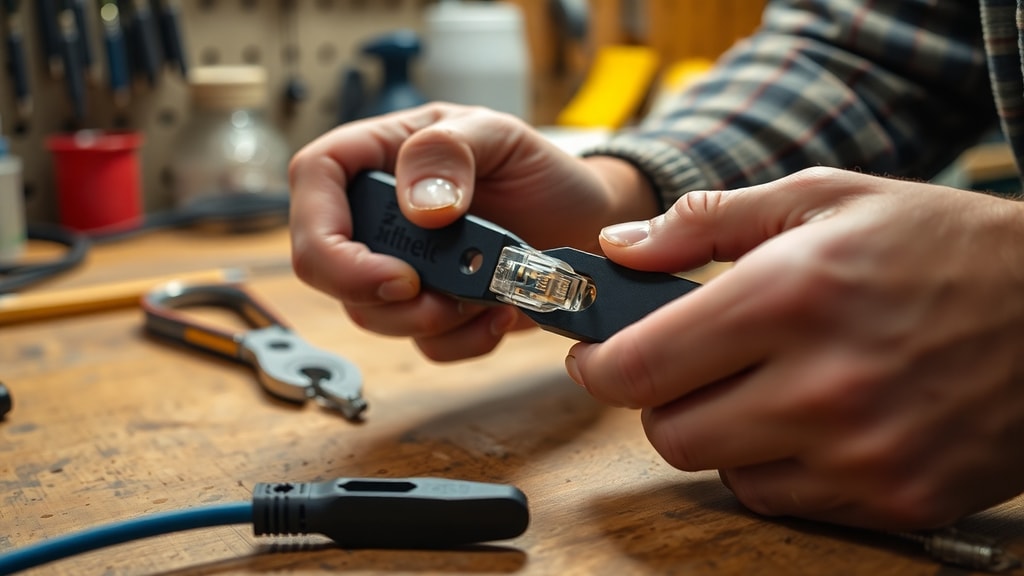
UTP cables offer a balance of cost, performance, and ease of use that makes them the default choice for structured cabling. However, they are not suitable for every situation. Below is a list of the main advantages and disadvantages to consider when selecting UTP for a network installation.
- Advantages: Low material cost compared to shielded cables; lightweight and flexible, making pulling through conduits easier; does not require grounding, simplifying installation; wide compatibility with all standard Ethernet devices; readily available in pre-made patch cables and bulk spools; sufficient performance for most indoor office and home environments.
- Disadvantages: More susceptible to electromagnetic interference and crosstalk than shielded twisted pair (STP) or foil twisted pair (FTP); maximum recommended distance is 100 meters without a repeater or switch; performance degrades significantly if installed near high-power electrical cables or heavy machinery; limited protection against physical damage due to thin jacket; can be a security concern because emitted signals can potentially be intercepted without physical contact.
Despite these drawbacks, UTP remains the most deployed cable type for Ethernet connectivity because the majority of network devices operate in low-interference settings. Installation best practices, such as maintaining separation from power lines and using proper bend radii, help mitigate its limitations.
Ideal Applications for UTP Cable
UTP is best suited for environments where electromagnetic interference is minimal and where cost-effectiveness is a priority. The most common applications include:
Home networks: Connecting routers, switches, computers, smart TVs, and gaming consoles in residential settings. Office LANs: Linking workstations, printers, and servers within commercial buildings that do not contain heavy industrial equipment. Data centers (with Cat6a): For server-to-switch connections when 10 Gbps is required and interference is controlled. Temporary network setups: Events, trade shows, and small business expansions where quick, inexpensive cabling is needed. Educational institutions: Schools and universities typically run UTP throughout classrooms and administrative areas. In all these cases, the cable is run inside walls, ceilings, or cable trays, and it must be kept at least 12 inches away from parallel electrical wiring to avoid noise coupling. For outdoor or underground installations, UTP is not recommended unless it is specifically rated for exterior use with a waterproof jacket; otherwise, moisture can degrade signal quality.
Installation and Termination Considerations
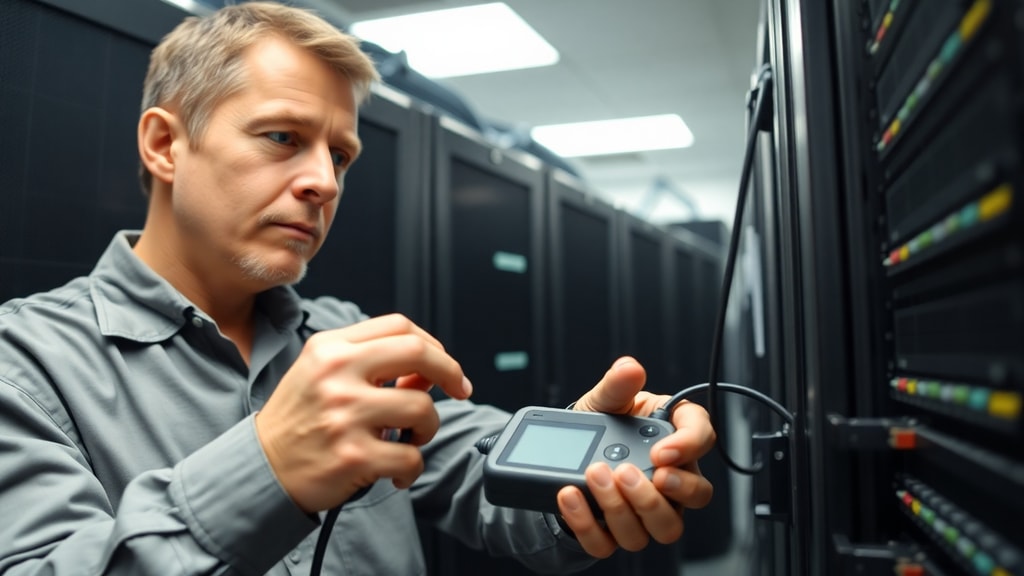
Proper installation of UTP cable is critical to achieving the rated performance. The cable must not be bent beyond its minimum bend radius (typically four times the outer diameter) because sharp bends can disrupt the pair twists and cause impedance mismatches. Additionally, untwisting the pairs too much when terminating into an RJ45 connector can introduce crosstalk and reduce effective bandwidth. It is recommended to keep the untwisted portion to less than 13 millimeters (half an inch). Use a quality crimping tool and a cable tester to verify continuity and wire mapping. For longer runs, avoid running UTP parallel to high-voltage power cables; if crossing is unavoidable, do so at a 90-degree angle. Finally, always label both ends of each cable run to simplify future troubleshooting. A well-installed UTP network can provide years of reliable service with minimal maintenance.
For a deeper understanding of UTP cable structure and standards, refer to the technical explanation provided by CCNA Network on UTP Cabling. The source describes the physical construction and the twisted pair mechanism in detail. Additionally, the manufacturer's glossary offers practical advice on selecting the appropriate category; see the Lenovo Glossary entry for UTP for further details on performance characteristics and usage scenarios.
References
CCNA Network. (n.d.). Cabeamento UTP. Retrieved from https://ccna.network/cabeamento-utp/
Lenovo. (n.d.). What is UTP? Retrieved from https://www.lenovo.com/pt/pt/glossary/utp/index.html
ISPBLOG. (2016). Cabo UTP: você sabe como funciona? Retrieved from https://www.ispblog.com.br/2016/07/01/cabo-utp-voce-sabe-como-funciona/
Eletriza. (n.d.). Cabos de Rede UTP. Retrieved from https://eletriza.com.br/fios-e-cabos-eletricos/cabo-multilan-utp-para-internet/
Wikipedia. (n.d.). Par Trançado sem Blindagem. Retrieved from https://pt.wikipedia.org/wiki/Cabo_de_par_tran%C3%A7ado