What is Command Prompt?
Command Prompt, often abbreviated as CMD, is the native command-line interpreter application found in all modern Windows operating systems. It provides a text-based interface known as a Command Line Interface (CLI), allowing users to interact with the operating system directly by typing commands. Unlike the graphical user interface (GUI) that most people use daily, Command Prompt requires no mouse; every action is executed through keyboard input. The executable file for this application is cmd.exe, a legacy program rooted in the MS-DOS system that Microsoft used in the early 1980s. Even though Windows now relies heavily on visual elements, Command Prompt remains a powerful tool for system administration, troubleshooting, automation, and accessing features that are hidden from the GUI. It is widely used by IT professionals, developers, and power users who need precise control over their machines.
The core function of Command Prompt is to accept text commands and execute them. These commands can perform file operations such as copying, moving, and deleting files; manage user accounts and permissions; configure network settings; and run diagnostic utilities. Because it works without the overhead of a graphical environment, Command Prompt can be faster and more efficient for repetitive tasks. Additionally, users can create batch files (.bat or .cmd) that contain multiple commands, allowing entire sequences of operations to be automated with a single command. Understanding Command Prompt is an essential skill for anyone who wants to go beyond the basics of Windows and take full control of their computer.
How to Launch Command Prompt
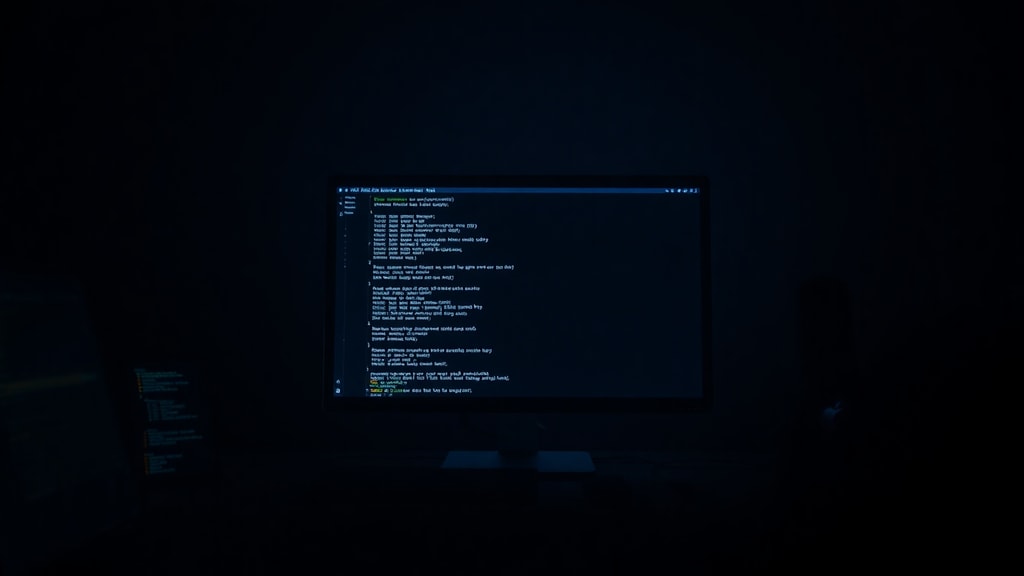
Starting Command Prompt is straightforward, and there are several methods to open it depending on your needs. Knowing multiple ways to launch CMD can save time, especially when you need to run it with administrative privileges (elevated mode) for system-level changes. Below is a list of the most common methods:
- Type
cmdinto the Start Search box (or Cortana search bar) and press Enter. To run as administrator, right-click on the result and select "Run as administrator". - Press the Windows key + X to open the Power Users menu, then select "Command Prompt" or "Command Prompt (Admin)". On some Windows versions, it may be labeled as "Windows PowerShell" but the classic CMD is still available.
- Open the Run dialog by pressing Windows + R, type
cmd, and press Enter. Holding Ctrl+Shift+Enter will run it as administrator. - In File Explorer, navigate to any folder, click on the address bar, type
cmd, and press Enter. This opens Command Prompt with that folder as the current working directory. - Create a desktop shortcut to
cmd.exefor quick access. Right-click on the desktop, choose New > Shortcut, and entercmd.exeas the location.
Each method has its advantages. For example, using the address bar in File Explorer is very convenient when you need to run commands on a specific folder, while the Power Users menu is ideal for administrative tasks. Remember that many commands require elevated privileges, so always consider whether you need to run Command Prompt as an administrator.
Essential Command Prompt Commands
Learning a handful of basic commands will quickly make you productive in the command line. Below is a table of commonly used commands that cover file navigation, management, and system control. Each command has its own set of options (switches) that you can discover by typing the command followed by /?.
| Command | Description | Example |
dir | Lists the files and subdirectories in the current directory. | dir /w displays wide format. |
cd | Changes the current working directory. Use cd .. to go up one level. | cd C:\Windows\System32 |
copy | Copies one or more files from one location to another. | copy file.txt D:\Backup\ |
del | Deletes one or more files. Use with caution. | del *.tmp removes all .tmp files. |
mkdir | Creates a new directory (folder). | mkdir NewFolder |
shutdown | Shuts down, restarts, or logs off the computer. /s for shutdown. | shutdown /s /t 60 shuts down in 60 seconds. |
ipconfig | Displays network configuration details like IP address, subnet mask, and default gateway. | ipconfig /all shows detailed info. |
ping | Tests connectivity to a remote host by sending ICMP packets. | ping google.com |
These commands are just the beginning. You can combine them with various parameters to perform complex tasks. For instance, dir /s lists all files in all subdirectories, and copy /y suppresses confirmation prompts when overwriting files. Mastering these basics will give you a strong foundation for using Command Prompt effectively.

Advanced Tips and Tricks
Beyond basic commands, Command Prompt offers powerful features for power users. One of the most useful is automation through batch files. A batch file is a plain text file containing a series of commands that are executed sequentially. You can create one using Notepad, save it with a .bat extension, and run it by double-clicking or calling it from Command Prompt. For example, a simple backup script could copy important files to an external drive every day. To learn more about writing batch scripts, you can refer to detailed batch scripting resources online.
Another advanced technique is command piping and redirection. The pipe symbol | allows you to send the output of one command as input to another. For instance, dir | find "txt" lists only files with "txt" in their name. Redirection operators like > and >> let you send command output to a file instead of the screen. dir > filelist.txt writes the directory listing to a file, while >> appends to an existing file. These techniques are invaluable for logging and reporting.
Command Prompt also supports environment variables, which store system and user-specific data. Variables like %USERPROFILE% point to the current user's home folder, and %WINDIR% points to the Windows directory. You can use them in commands to make scripts more portable. For example, cd %USERPROFILE%\Documents works on any computer without hardcoding the username.

For network troubleshooting, combine ipconfig, ping, tracert, and nslookup to diagnose connectivity issues. The tracert command traces the route packets take to a destination, which can help identify where network delays occur. Another hidden gem is the sfc (System File Checker) command, which scans protected system files and replaces corrupted ones. Run sfc /scannow from an elevated Command Prompt to repair Windows integrity.
Practical Examples for System Administration
System administrators rely on Command Prompt daily to manage users, services, and disks. For example, to list all running processes, you can use tasklist. To stop a process, use taskkill /PID processID. These commands give you control without needing third-party tools. Disk management is also possible through the command line: diskpart opens a utility for partitioning and formatting drives, while chkdsk scans drives for errors.
If you need to change Windows settings through the command line, the reg command allows you to read, add, delete, and modify registry keys. Because editing the registry can be dangerous, always back it up first. For more user-friendly system administration, Microsoft provides the official Windows command reference which covers every built-in command along with syntax and examples.

Network administrators often use Command Prompt to configure network interfaces with netsh. This tool can reset TCP/IP stacks, set static IP addresses, and manage firewall rules. For example, netsh int ip reset can fix certain network problems. Combining these commands with task scheduling (via the schtasks command) allows you to automate maintenance tasks like running a weekly disk cleanup script.
Common Troubleshooting with Command Prompt
When Windows behaves unexpectedly, Command Prompt is often the first line of defense. If you cannot open the GUI at all, you can boot into Safe Mode with Command Prompt to repair the system. The bootrec command can fix boot records, and dism (Deployment Image Servicing and Management) can repair the Windows image. The dism /online /cleanup-image /restorehealth command is frequently used to fix corruption without reinstalling Windows.
Another common issue is malware running as a process that resists normal deletion. From an elevated Command Prompt, you can identify the process with tasklist and terminate it with taskkill /f /im processname.exe. Then use del to remove the associated file. Because Command Prompt bypasses some restrictions, it can be more effective than using File Explorer in these situations.

Remember that many commands require administrator privileges to work properly. If you get "Access denied" errors, close Command Prompt and relaunch it as administrator. Also, be careful when using commands that modify system files; one wrong parameter can cause instability. Always double-check your syntax before pressing Enter.
References
GeeksforGeeks – "What is a Command Prompt?" – https://www.geeksforgeeks.org/operating-systems/what-is-a-command-prompt/
TeamViewer – "What is Command Prompt? 10 basic CMD commands" – https://www.teamviewer.com/en/insights/what-is-command-prompt-and-basic-commands/
TechTarget – "What is a command prompt?" – https://www.techtarget.com/whatis/definition/command-prompt
Dell Support – "Windows Command Prompt Information..." – https://www.dell.com/support/kbdoc/en-lv/000130703/the-command-prompt-what-it-is-and-how-to-use-it-on-a-dell-system
Windows Help (Microsoft) – "Command Prompt: frequently asked questions" – https://web.archive.org/web/20150422041137/http:/windows.microsoft.com/en-us/windows/command-prompt-faq
ITPro – "Command Prompt Windows 10: What is it..." – https://www.itpro.com/microsoft-windows/30414/command-prompt-windows-10
Thomas-Krenn Wiki – "Cmd commands under Windows" – https://www.thomas-krenn.com/en/wiki/Cmd_commands_under_Windows