What Is a Psychotechnical Exam?
A psychotechnical exam, known in Portuguese as exame psicotécnico, is a technical psychological evaluation conducted by a licensed psychologist. Its purpose is to determine whether a candidate is apt or inapt for a specific activity, such as a public service job, obtaining a driver's license, or acquiring a firearm permit. This exam does not measure intelligence or rank candidates against each other. Instead, it focuses on verifying psychological compatibility with the demands of the role or task. The evaluation is standardized and follows strict guidelines set by professional psychology councils, ensuring fairness and objectivity.
The exam is widely used in Brazil for various purposes, including civil service exams, driver's license processes, and firearm registration. It is not a test of knowledge or skill but a psychological screening tool. The psychologist uses validated instruments to assess cognitive functions, emotional stability, and behavioral tendencies. The result is binary: the candidate is either considered apt or inapt. There are no scores or rankings, and the evaluation does not aim to select a specific personality type. Instead, it seeks to identify any emotional imbalances or behavioral disorders that could interfere with safe or effective performance.
Legal Purpose in Public Service
In the context of public service, the psychotechnical exam has a clear legal purpose. Its exclusive goal is to verify psychological compatibility with the specific duties of the job. It is not used to filter for a particular personality profile or to select a professional profile. The exam only detects emotional imbalances or behavioral disorders that are incompatible with the role. This means that candidates are not compared to each other, and there is no ranking based on psychological traits. The evaluation is binary: apt or inapt.

This approach ensures that the exam does not discriminate against candidates based on personality differences. For example, a candidate who is introverted or extroverted can both be considered apt for a public service job, as long as they do not have conditions that impair their ability to perform the duties. The exam focuses on factors such as emotional control, stress tolerance, and decision-making under pressure. These factors are directly related to job performance and safety. The legal framework for this exam is established by the Federal Council of Psychology, which sets standards for the instruments used and the procedures followed.
Methodology and Standards
The psychotechnical exam uses standardized, objective instruments that are recognized by the scientific community. These instruments must be approved by the SATEPSI, which is the Psychological Tests Evaluation System of the Federal Council of Psychology. SATEPSI ensures that all tests used in the exam are valid, reliable, and appropriate for the purpose. The psychologist selects a battery of tests based on the specific requirements of the job or activity. Common tests include assessments of attention, memory, reaction time, and emotional control.
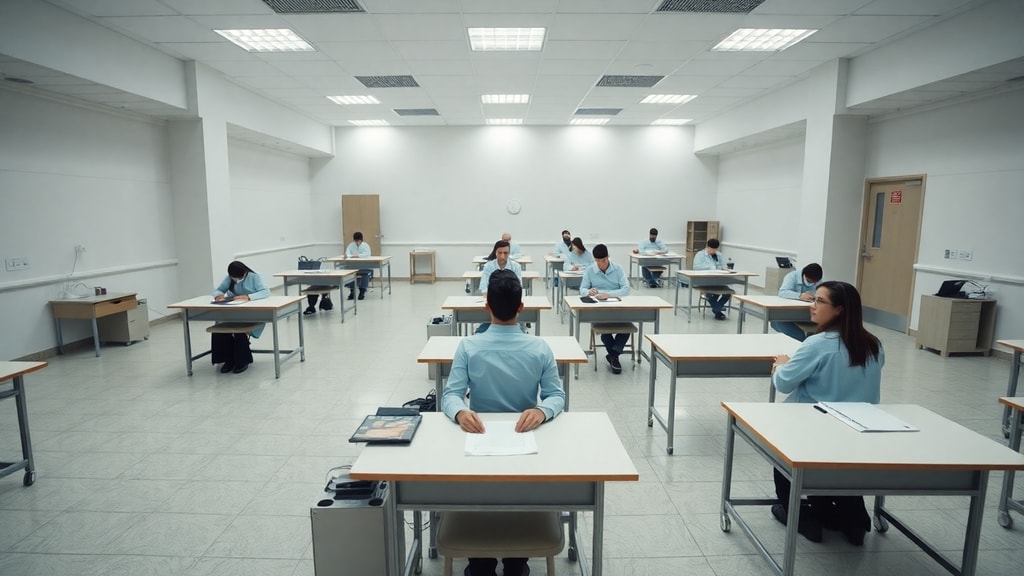
The exam typically lasts between one and one and a half hours. During this time, the candidate completes a series of tasks and questionnaires. The psychologist observes the candidate's behavior and responses. The results are analyzed according to established norms. The outcome is binary: apt or inapt. There are no scores or rankings. This binary system simplifies the decision-making process and reduces the risk of subjective interpretation. The psychologist must provide a detailed report explaining the basis for the decision. Candidates who are deemed inapt have the right to appeal or request a re-evaluation.

For Driver's Licenses
In the process of obtaining a driver's license, the psychotechnical exam is a mandatory step. It is conducted by the Detran, which is the state traffic department. The exam evaluates cognitive, emotional, and behavioral aptitude to ensure safe driving. Key areas assessed include attention, memory, reaction time, and emotional control. Candidates must achieve at least 50 percent correct answers to pass. This threshold ensures that drivers have the basic psychological capabilities needed to operate a vehicle safely.
The exam for driver's licenses is similar to other psychotechnical evaluations but focuses on driving-specific skills. For example, tests may measure how quickly a candidate can react to a visual stimulus or how well they can maintain focus in a distracting environment. Emotional control is also important, as drivers must manage stress and frustration on the road. The exam is designed to identify individuals who may be at higher risk of accidents due to psychological factors. Passing the exam does not guarantee that a candidate is a good driver, but it ensures that they have the minimum psychological requirements.
Duration and Outcome
The psychotechnical exam typically lasts between one and one and a half hours. The exact duration depends on the specific tests used and the number of candidates being evaluated. Results are usually released on the same day, often within a few hours. This quick turnaround allows candidates to proceed with their applications without significant delays. The cost of the exam varies by state. In general, it ranges from approximately 100 to 300 Brazilian reais. In some states, such as Rio de Janeiro, the cost can be as high as 383.76 reais.
The outcome of the exam is binary: apt or inapt. Candidates who are deemed apt can proceed with their application, whether for a public service job, a driver's license, or a firearm permit. Those who are deemed inapt may have the option to appeal or undergo a re-evaluation. The psychologist provides a detailed report explaining the reasons for the decision. This report can be used by the candidate to understand their psychological profile and address any issues that may have led to the inapt result. It is important to note that being deemed inapt does not mean the candidate has a mental health condition. It simply means that their psychological profile is not compatible with the specific demands of the activity.
Common Tests and Their Purpose
The psychotechnical exam includes a variety of tests, each designed to assess a specific psychological function. Below is a list of common tests and their purposes:
- Attention tests: Measure the ability to focus on a task for an extended period and to shift focus when needed.
- Memory tests: Assess short-term and long-term memory, including the ability to recall information accurately.
- Reaction time tests: Evaluate how quickly a candidate responds to visual or auditory stimuli.
- Emotional control tests: Determine the ability to manage stress, frustration, and other emotions in challenging situations.
- Problem-solving tests: Assess logical reasoning and decision-making skills under time constraints.
These tests are standardized and validated by the scientific community. They are selected by the psychologist based on the specific requirements of the job or activity. For example, a driver's license exam may emphasize reaction time and attention, while a public service exam may focus on emotional control and problem-solving. The combination of tests provides a comprehensive picture of the candidate's psychological profile.

Comparison of Psychotechnical Exam Uses
The psychotechnical exam is used in different contexts, each with its own focus and requirements. The table below compares the main uses:
| Context | Primary Focus | Passing Criteria | Cost Range |
|---|---|---|---|
| Public Service | Emotional stability and behavioral compatibility with job duties | Binary (apt/inapt) | 100-300 BRL |
| Driver's License | Cognitive functions (attention, memory, reaction time) and emotional control | At least 50% correct answers | 100-300 BRL |
| Firearm Permit | Emotional control and risk assessment | Binary (apt/inapt) | 100-300 BRL |
This table shows that while the exam is similar across contexts, the specific focus and passing criteria can vary. For driver's licenses, there is a quantitative threshold of 50 percent correct answers. For public service and firearm permits, the result is purely binary based on the psychologist's evaluation. The cost is generally consistent across contexts, though it can vary by state.
How to Prepare for the Exam
Preparation for the psychotechnical exam is different from studying for a knowledge test. Since the exam assesses psychological traits, candidates cannot memorize answers or practice specific skills. However, there are steps that can help ensure a better experience. First, get a good night's sleep before the exam. Fatigue can affect attention and reaction time. Second, avoid caffeine or other stimulants that may increase anxiety. Third, arrive at the exam location early to reduce stress. Fourth, listen carefully to the psychologist's instructions and ask questions if anything is unclear.
It is also helpful to understand what the exam involves. Knowing that the tests are standardized and objective can reduce anxiety. Candidates should not try to guess what the psychologist is looking for. Instead, they should respond honestly and naturally. The exam is not designed to trick candidates or to find hidden flaws. It is simply a tool to ensure that candidates have the psychological capabilities needed for the activity. For more detailed information, candidates can refer to resources such as JusBrasil's guide on psychological evaluation for public service candidates.
Common Myths and Misconceptions
There are several myths about the psychotechnical exam that can cause unnecessary anxiety. One common myth is that the exam measures intelligence. In reality, it does not. The exam assesses psychological compatibility, not IQ. Another myth is that the exam is used to rank candidates. This is false. The result is binary, and there is no ranking. A third myth is that failing the exam means the candidate has a mental health condition. This is not true. Failing simply means that the candidate's psychological profile is not compatible with the specific demands of the activity. It does not indicate a disorder or deficiency.
Another misconception is that the exam is subjective and depends on the psychologist's opinion. In fact, the exam uses standardized instruments that are validated by the scientific community. The psychologist follows strict guidelines and must provide a detailed report. The process is designed to be as objective as possible. Candidates who are concerned about the exam can seek more information from reliable sources, such as Doutor Multas' guide on the psychotechnical test for driver's licenses. Understanding the facts can help candidates approach the exam with confidence.
References
This article is based on information from several reliable sources. The definition and legal purpose of the psychotechnical exam are derived from Wikipedia's article on the topic, available at pt.wikipedia.org/wiki/Exame_psicotecnico. Additional details on the legal purpose in public service come from JusBrasil and Magistrarcursos, accessible at magistrarcursos.com.br/blog/exame-psicotecnico/ and jusbrasil.com.br. Information on methodology and standards is based on the Federal Council of Psychology's SATEPSI system, as referenced in the same Magistrarcursos article. Details on the driver's license exam are from Doutor Multas at doutormultas.com.br/teste-psicotecnico/ and 99app.com. These sources provide comprehensive and accurate information for anyone seeking to understand the psychotechnical exam.