The Essentials of Creating Effective Posters
Posters remain one of the most powerful visual communication tools across academic, business, and creative fields. Whether you are presenting research at a conference, promoting an upcoming event, or sharing information in a public space, the quality of your poster directly influences how your message is received. Creating a poster, or criar posters in Portuguese, involves much more than simply placing text and images on a canvas. It requires a strategic approach to layout, typography, color, and content selection. An effective poster captures attention quickly, conveys key information clearly, and leaves a lasting impression on the viewer. This article provides practical design tips and ideas to help you craft posters that stand out. We will cover fundamental principles such as text limits, font sizes, visual hierarchy, imagery guidelines, and layout structures, all based on established best practices from leading institutions.
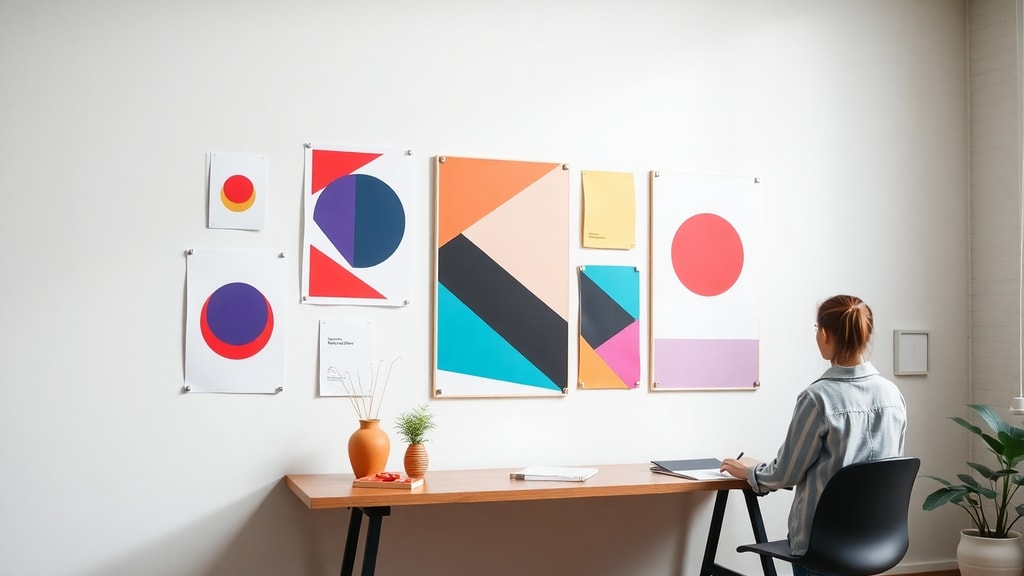
Understanding the Purpose and Audience
Before you open any design software, take a moment to define the purpose of your poster. Are you informing, persuading, or educating? Who will be viewing it? A scientific poster for a conference demands a different approach than a poster advertising a local concert. The audience determines the tone, complexity, and amount of text you should include. According to guidelines from Argonne National Laboratory, effective posters limit text to between 800 and 1,000 words. This forces you to synthesize information and focus on the most essential points. Long paragraphs discourage reading; instead, aim for concise phrases and bullet points. Identify the single most important takeaway you want viewers to remember, and design everything around that core message.

Core Design Principles: Fonts, Sizes, and Readability
Typography is the backbone of any poster. The right font sizes ensure that your poster is readable from a distance, typically six feet away. For titles and author names, use a font size of at least 48 points. Section headings should be in the 36 to 48 point range, while body text should be between 30 and 36 points. Using fewer than three different font sizes helps maintain a clean hierarchy. Avoid highly decorative fonts for body text; stick to clean, sans-serif typefaces for modern readability or serif fonts for a more academic tone. The table below summarizes recommended font sizes for different poster elements based on Argonne National Laboratory standards.

| Element | Recommended Font Size | Notes |
|---|---|---|
| Title | 48 pt or larger | Should be visible from across the room |
| Author / Affiliation | 36–48 pt | Keep consistent with title style |
| Section Headings | 36–42 pt | Use bold for emphasis |
| Body Text | 30–36 pt | Ensure good line spacing (1.15–1.5) |
| Captions / Labels | 24–28 pt | Place close to relevant image or graphic |
This table serves as a quick reference when you begin designing. Adjust sizes based on your actual poster dimensions, but always test readability by stepping back and checking if the text is legible.

Visual Hierarchy and Typography Guidelines
A poster must guide the viewer’s eye naturally from the most important information to supporting details. Visual hierarchy is achieved by varying font sizes, using bold or italic styles, and arranging elements spatially. A key rule is to use no more than two typefaces throughout the entire poster. Pick one for headings and one for body text, or use different weights of the same family. Limit yourself to three font sizes overall: one for the title, one for section headings, and one for body text. Use bold text sparingly to highlight critical phrases or data points. Avoid using all caps for large blocks of text, as it reduces readability. Left-aligned text is generally preferred over fully justified text because it prevents awkward spacing and is easier to scan. The scientific poster structure typically follows this flow: Introduction, Methodology, Results (with visuals), Discussion, Conclusions, and References. Organize your content top-to-bottom and left-to-right, mimicking the natural reading pattern for most Western audiences.

Imagery and Visuals
Images are powerful attention grabbers, but poor-quality visuals can ruin an otherwise well-designed poster. Always use high-resolution images, preferably 300 DPI or higher. Avoid low-resolution web clippings that appear pixelated when printed. Each image should have a clear purpose: to illustrate a concept, show data, or evoke emotion. Include captions that briefly explain what the image shows and, if necessary, credit the source. Argonne National Laboratory emphasizes that every visual element must be credited to avoid plagiarism issues. When using graphs or charts, ensure axes are labeled clearly and font sizes match your poster’s hierarchy. Consider white space around images to prevent the poster from feeling cluttered. A good rule is to leave margins of at least 2.5 inches on all sides, which also helps maintain readability and contrast. Avoid low-contrast color combinations such as yellow text on a white background or light gray on white, as they are difficult to read from a distance.
Layout and Structure for Maximum Impact
The layout is the skeleton of your poster. Start by dividing your poster into clear sections using columns, boxes, or consistent spacing. One effective method is to create a grid with three or four columns, depending on the poster size. Place the most important information, such as the title and key results, in the upper left area, where viewers typically begin scanning. Use bullet points and brief phrases instead of full sentences to convey information quickly. The standard scientific poster structure from Universitat Pompeu Fabra includes: Introduction, Methodology, Results, Discussion, Conclusions, and References. For non-academic posters, adapt this structure to fit your goals, for example, Problem, Solution, Benefits, Call to Action. Below is a list of layout best practices to keep in mind:
- Left-align all text; avoid full justification which creates uneven word spacing.
- Use bullet points or numbered lists for easy skimming.
- Organize content in a logical top-to-bottom, left-to-right flow.
- Keep white space generous; do not overcrowd sections.
- Ensure margins of at least 2.5 inches to create a clean frame.
- Test the poster by looking at it from six feet away to verify readability.
Following these guidelines will help you create a poster that is both aesthetically pleasing and easy to understand. The goal is to make your message accessible without forcing the viewer to work hard.
Including a Call to Action
If your poster is promoting an event, campaign, or product, include a clear call to action (CTA). A CTA tells the viewer exactly what you want them to do next: register for a conference, visit a website, donate, or attend a workshop. Place the CTA prominently, often at the bottom right or center, using a larger font or a contrasting color to draw attention. The Venngage blog emphasizes that a strong CTA can significantly increase engagement. For example, use phrases like Register Now, Visit Our Booth, or Learn More, followed by a URL or QR code. Make sure the CTA stands out from the surrounding text but still fits within the overall design.
Tools and Resources for Poster Creation
You do not need to be a professional designer to create an impressive poster. Many online tools offer templates and drag-and-drop interfaces that simplify the process. Canva is one of the most popular platforms, providing thousands of customizable poster templates for various purposes. Simply select a template, adjust colors and fonts, and add your content. For more detailed design guidance, VistaPrint’s step-by-step guide offers practical tips for creating print-ready posters. If you are working on a scientific poster, consider downloading a template from your institution or using software like PowerPoint or LaTeX with pre-formatted templates. Always check printing requirements before finalizing your file, including color mode (CMYK for print) and bleed margins.
References
Argonne National Laboratory. Guide to Effective Poster Design. Retrieved from www.anl.gov/education/guide-to-effective-poster-design
Universitat Pompeu Fabra. Guia per a la creació de pòsters científics. Retrieved from upf.edu
Venngage. Guía de diseño de pósters. Retrieved from es.venngage.com