Understanding the Decibel Scale: A Guide to Sound Levels
The world around us is filled with sound, from the faint rustle of leaves to the roar of a jet engine. But how do we measure and compare these vastly different noise levels? The answer lies in the decibel scale, a logarithmic unit that quantifies sound intensity. A sound level table is an essential tool for understanding the relative loudness of common sounds and, more importantly, for recognizing the risks of noise-induced hearing loss. This article will break down the decibel range, explain how loudness is perceived, and provide a practical guide to safe listening based on data from leading health organizations. Whether you are a concerned parent, a construction worker, or simply someone who loves music, knowing the numbers behind the noise can protect your hearing for life.
The Decibel Range: From Silence to Pain
The human ear can detect an extraordinary range of sound pressures. The decibel scale starts at 0 dB, which is the threshold of hearing — the quietest sound a healthy young ear can perceive. This is not complete silence, but rather the baseline for measurement. At the other end of the scale, sounds reach around 140 dB, known as the threshold of pain. At this level, sound pressure is so intense that it can cause immediate physical damage, including eardrum rupture. For reference, a typical conversation takes place around 60 dB, while a rock concert often peaks at 110 dB or higher. Because the scale is logarithmic (not linear), each 10 dB increase represents a tenfold increase in sound intensity, and the human ear perceives a 10 dB jump as roughly a doubling of loudness. This means the difference between 60 dB (normal conversation) and 70 dB (vacuum cleaner) is not just a small step — it is a significant increase in the energy reaching your ears.
Sound Level Table: Common Sounds and Their Decibel Ratings
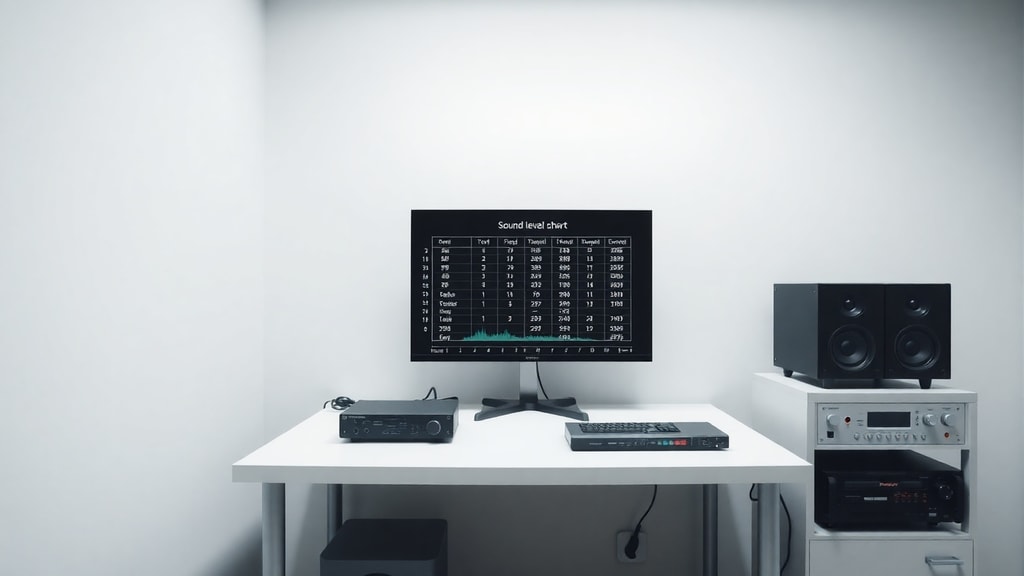
The following table provides a clear snapshot of typical sound sources across the decibel spectrum. The values are A-weighted (dBA), which approximates how the human ear responds to different frequencies. This weighting is the standard used in hearing conservation guidelines.
| Decibel Level (dBA) | Sound Source | Risk and Notes |
| 0 | Threshold of hearing | Silence – theoretical baseline |
| 30 | Whisper, quiet library | Very safe; no risk |
| 60 | Normal conversation, dishwasher | Safe; comfortable level |
| 70 | Vacuum cleaner, city traffic | Upper limit for 24-hour exposure without harm |
| 85 | Lawnmower, school bus interior, motorcycle | Occupational exposure limit – hearing protection required for 8-hour shifts |
| 90 | Blender, heavy truck, subway | Risk of damage after prolonged exposure |
| 100 | Jackhammer, power tools, motorcycle (fast speeds) | Damage possible in under 15 minutes without protection |
| 110 | Nightclub, rock concert, sporting event | Risk of immediate harm after short exposure; earplugs strongly advised |
| 120 | Jet engine at 100 ft, siren, thunderclap | Threshold of discomfort; immediate hearing loss risk |
| 140 | Gun muzzle blast, firecracker at close range | Threshold of pain; can cause instant permanent damage |
This table is based on widely accepted references from the National Institute on Deafness and Other Communication Disorders and the Merck Manual. Keep in mind that actual levels vary depending on distance, environment, and individual hearing sensitivity.
Key Noise Exposure Guidelines: What the Numbers Mean for Your Health
Understanding the decibel table is only the first step. The critical question is: how long can you safely listen before damage occurs? Hearing loss is cumulative and often painless — you may not notice the damage until years later. Here are essential safety guidelines supported by the World Health Organization, the National Institute for Occupational Safety and Health (NIOSH), and the American Academy of Audiology.
- Continuous exposure below 70 dBA is considered safe for 24 hours. This is the WHO recommended limit for environmental noise to prevent noise-induced hearing loss.
- At 85 dBA, the safe exposure time drops to 8 hours. The Occupational Safety and Health Administration (OSHA) and NIOSH both use 85 dB as the action level for mandatory hearing conservation programs in workplaces. For every 3 dB increase above 85 dB, the permissible exposure time is cut in half. For example, 88 dB allows only 4 hours, 91 dB allows 2 hours, and so on.
- At 100 dBA, safe exposure is just 15 minutes without hearing protection.
- At 110 dBA, hearing damage can occur after only a couple of minutes.
- Any sound above 120 dBA presents an immediate risk of permanent injury, even from a single burst. This includes fireworks, gunshots, and amplified music at close range.
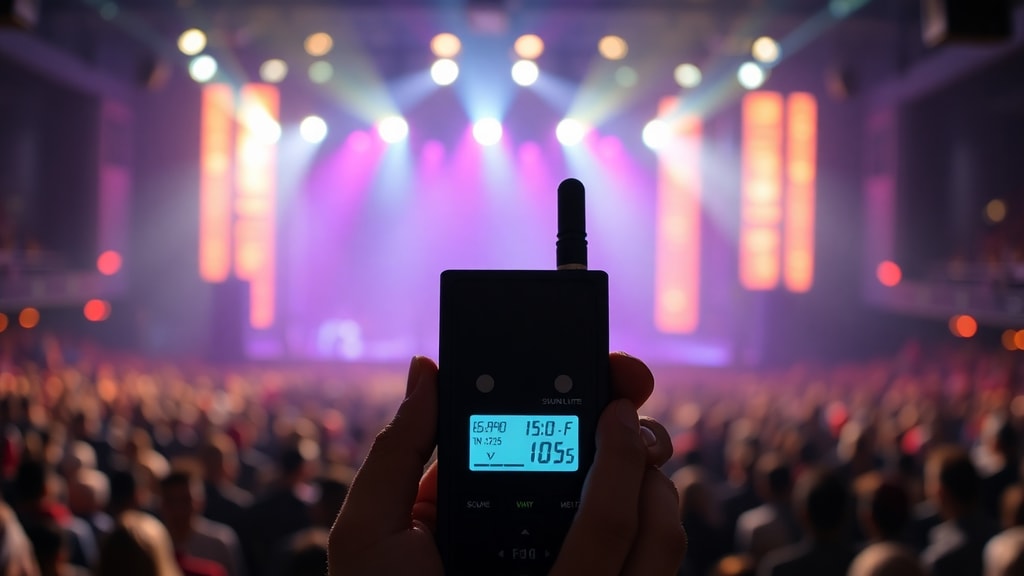
The key takeaway: the louder the sound, the shorter the safe listening time. This is why construction workers, musicians, and airport ground crews must wear earplugs or earmuffs. Even recreational activities like attending a loud concert or using power tools at home require protection. Many smartphone apps can measure approximate decibel levels, but for precise workplace assessments, professional sound level meters are used.
Why A-Weighting Matters for Sound Level Measurement
The decibel values in the table above are given as dBA — the A-weighted scale. This adjustment accounts for the fact that human ears are less sensitive to very low and very high frequencies. For example, a 60 dB sound at a low frequency might sound quieter than a 60 dB sound in the middle range. A-weighting filters the sound signal to mimic our natural hearing curve, making it the preferred metric for occupational and environmental noise guidelines. Other scales exist, like C-weighting for very loud industrial noise, but for general hearing protection advice, dBA is the standard. When you see a noise level listed as 70 dBA, you can trust that it aligns with how your ears actually perceive the loudness.
Practical Steps to Protect Your Hearing
Armed with the information from the sound level table, you can take actionable steps. First, invest in high-fidelity earplugs if you attend concerts, racing events, or shoot firearms. These reduce volume evenly without distorting music. Second, when using loud equipment like lawnmowers, leaf blowers, or table saws, wear over-ear hearing protectors rated for the appropriate level. Third, turn down the volume on personal audio devices. A good rule of thumb: if someone next to you can hear your music, it is too loud. Fourth, take listening breaks during prolonged exposure. Finally, if you routinely work in environments above 85 dBA, your employer is required to provide hearing protection and annual hearing tests under OSHA regulations.
For more detailed information on safe exposure limits and hearing conservation, consult the resources from the National Institute on Deafness and Other Communication Disorders (NIDCD) and the National Institute for Occupational Safety and Health (NIOSH). These organizations provide authoritative data and practical recommendations.
Common Misconceptions About Decibels and Hearing Loss
Many people believe they can easily tell when a sound is too loud. In reality, hearing damage often occurs without pain or immediate symptoms. A common myth is that only constant loud noise causes hearing loss; but even a single explosive sound above 140 dB can cause permanent damage. Another misconception is that earplugs are only needed for very loud sounds. However, cumulative exposure to moderate noise — for example, 72 hours of lawnmower use per year — can add up. Furthermore, age-related hearing loss is accelerated by noise exposure. Protecting your ears at any age reduces the long-term risk. The sound level table is a helpful reference, but it is only as good as your willingness to act on it.
Conclusion: Know the Numbers, Protect Your Future
Understanding the decibel scale and the sound level table is not just technical trivia — it is essential knowledge for hearing health. With safe exposure limits set at 70 dBA for 24 hours and 85 dBA for an 8-hour workday, you can gauge the risks of your daily environment. The table shows that many common activities, from using a blender to attending a sports game, fall into the danger zone if repeated frequently or prolonged. By using hearing protection, lowering volume, and limiting duration, you can prevent noise-induced hearing loss and tinnitus. Keep this guide handy, share it with family and coworkers, and make informed choices every time you turn up the volume or start a machine. Your ears will thank you for decades to come.
References
National Institute on Deafness and Other Communication Disorders (NIDCD). Decibel Levels and Safe Listening. Hearing Health Foundation. Available at: https://www.hearinghealthfoundation.org/keeplistening/decibels (accessed February 2025).
Centers for Disease Control and Prevention, National Institute for Occupational Safety and Health (NIOSH). Hearing Protection. Available at: https://www.cdc.gov/niosh/topics/noise/hearingprotection.html (accessed February 2025).
Merck Manual Professional Edition. Sound Levels. Available at: https://www.merckmanual.com/professional/multimedia/table/sound-levels (accessed February 2025).
World Health Organization (WHO). Environmental Noise and Hearing Loss. Available at: https://www.who.int/health-topics/environmental-health (accessed February 2025).
American Academy of Audiology. Noise-Induced Hearing Loss Fact Sheet. Available at: https://www.audiology.org/wp-content/uploads/ (accessed February 2025).