The Meaning and Origin of Baptism
Baptism is one of the most ancient and significant practices within Christianity. The word itself comes from the Greek term baptismos, which means to dip, to wash, or to immerse. From Latin, it passed into English as baptism. In its simplest form, baptism is a ritual act of washing with water that marks initiation into the Christian faith. But its meaning runs far deeper than a ceremonial cleaning. Christians across denominations understand baptism as a symbol of spiritual transformation, a cleansing from sin, and a public declaration of belonging to the body of Christ. The practice has roots in Jewish purification rites, but it took on a new and distinct meaning with the ministry of John the Baptist, who called people to repentance and baptized them in the Jordan River. Jesus himself was baptized by John, an event recorded in all four Gospels. After his resurrection, Jesus commanded his followers to go and make disciples of all nations, baptizing them in the name of the Father, and of the Son, and of the Holy Spirit. This command, known as the Great Commission, remains the foundation for Christian baptism today.
Baptism in the Early Church
In the decades following the death and resurrection of Jesus, baptism became the standard rite of entry into the Christian community. The book of Acts records numerous instances where new believers were baptized immediately after professing faith. In the early church, baptism was often performed by full immersion in natural bodies of water, such as rivers or the sea. Candidates for baptism underwent a period of instruction and preparation, sometimes lasting several years. They were known as catechumens. Baptism typically took place at Easter, symbolizing participation in the death and resurrection of Christ. The early church father Tertullian wrote extensively about baptism, describing it as the sacrament that washes away sins and imparts the Holy Spirit. As the church grew and spread throughout the Roman Empire, local customs began to influence baptismal practice. By the fourth century, baptism was universally recognized as the first sacrament of Christian initiation. The Council of Nicaea in 325 affirmed the necessity of baptism for salvation, a teaching that continues in many traditions today.
Methods and Modes of Baptism
Christian churches practice baptism in different ways. The method used often reflects theological convictions about what baptism represents. The three primary modes are immersion, aspersion, and affusion.

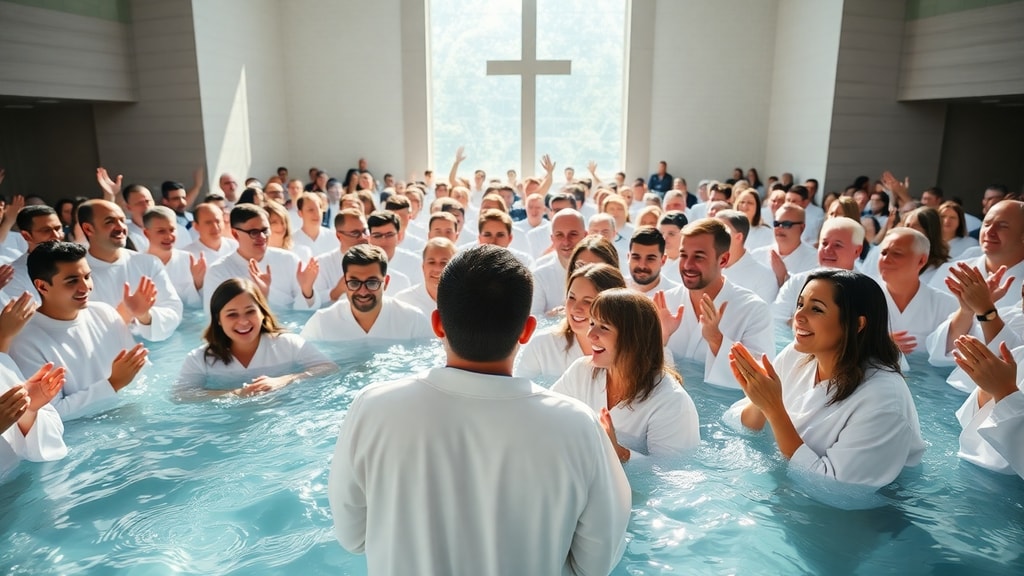
Immersion involves the complete submersion of the candidate under water. This method is common in Eastern Orthodox, Oriental Orthodox, and many Protestant traditions, including Baptists and evangelical churches. Supporters of immersion point to the Greek meaning of baptizo, which implies dipping or plunging. They also see immersion as a powerful symbol of dying with Christ and rising to new life.
Aspersion refers to the sprinkling of water over the head of the candidate. This method is common in Catholic, Lutheran, and Methodist churches. Aspersion is often used when baptizing infants or in settings where full immersion is impractical. Many churches that practice aspersion also accept immersion as a valid form.
Affusion involves pouring water over the head of the candidate. In some traditions, water is poured three times in honor of the Trinity. This method is also widely used in Catholic and Orthodox practice. The mode of affusion emphasizes the outpouring of the Holy Spirit and the washing away of sin.
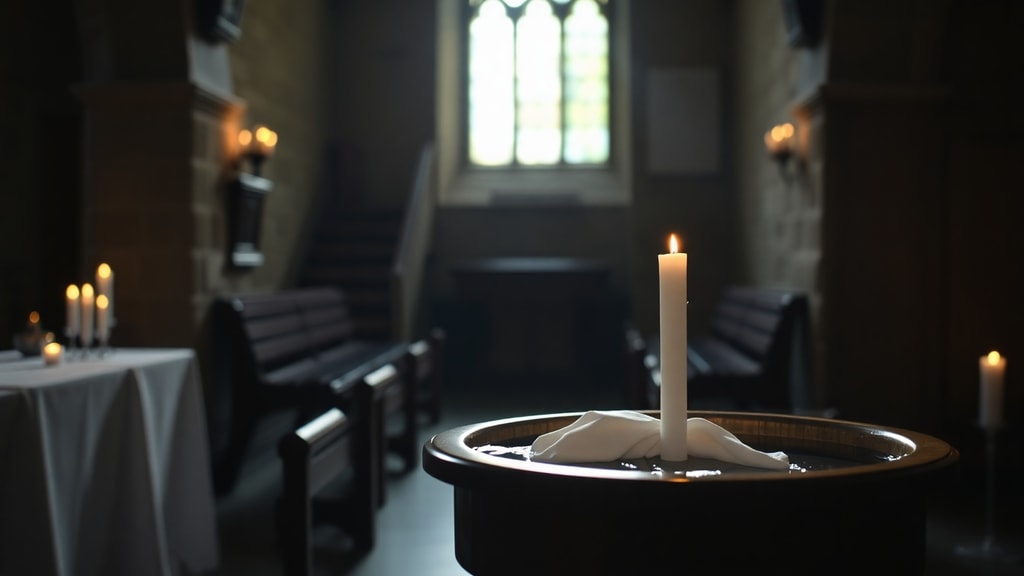
To summarize the main methods used across Christian traditions:
- Immersion: The candidate is fully submerged in water. Common in Eastern Orthodox, Baptist, and evangelical churches.
- Aspersion: Water is sprinkled on the head. Common in Catholic, Lutheran, and Anglican churches.
- Affusion: Water is poured over the head, often three times. Common in Catholic and Orthodox practice.
Christian Beliefs About Baptism Across Traditions
Different Christian groups hold varying beliefs about what baptism accomplishes. The Catholic Church teaches that baptism regenerates the soul, removes original sin, and makes the person a new creation. Infant baptism is practiced because the sacrament is seen as a gift of grace that does not depend on the recipient's conscious faith. The Orthodox Church holds a similar view, emphasizing that baptism unites the believer with Christ and incorporates them into the body of Christ. Orthodox baptism involves full immersion and is followed immediately by chrismation, which is the anointing with holy oil.
Many Protestant traditions, including Lutherans and Anglicans, also practice infant baptism and believe that baptism conveys grace and initiates the child into the covenant community. However, they may differ on the precise nature of how grace is imparted. Baptist and evangelical groups generally practice believer's baptism, which means baptism is administered only after a person makes a personal confession of faith. For these groups, baptism is not a means of salvation but a public declaration of faith and an act of obedience. It symbolizes the believer's identification with Christ's death, burial, and resurrection. Despite these differences, nearly all Christian traditions agree that baptism is a foundational step in the life of faith.

The table below summarizes key differences among major Christian traditions:
| Tradition | Typical Mode | Who Is Baptized | Meaning of Baptism |
|---|---|---|---|
| Catholic | Pouring or sprinkling | Infants and adults | Regeneration, removal of original sin, entry into the Church |
| Eastern Orthodox | Full immersion | Infants and adults | Union with Christ, new creation, gift of the Holy Spirit |
| Lutheran | Pouring or sprinkling | Infants and adults | Means of grace, forgiveness of sins, covenant membership |
| Baptist | Full immersion | Believers only | Public declaration of faith, symbol of death and resurrection |
| Methodist | Pouring or sprinkling | Infants and adults | Sign of new birth, incorporation into the church |
The Baptismal Formula and Its Significance
Regardless of denomination, most Christian baptisms include a specific verbal formula. The standard declaration is: I baptize you in the name of the Father, and of the Son, and of the Holy Spirit. This formula comes directly from Matthew 28:19, where Jesus gives the Great Commission to his apostles. The use of this Trinitarian formula distinguishes Christian baptism from other forms of ritual washing. In the early church, the formula was considered essential to the validity of the sacrament. Some heretical groups, such as the Arians who denied the full divinity of Christ, performed baptism using only the name of Jesus. The mainstream church consistently rejected this practice and insisted on the Trinitarian formula. Today, churches that practice baptism generally require the formula to be spoken by the officiating minister. The words are understood to invoke the presence and power of the triune God. They also express the believer's incorporation into the life of the Trinity.
Baptism as a Sacrament of Initiation
In most Christian frameworks, baptism is the first of the sacraments and the gateway to the spiritual life. The Catholic Church describes it as the vitae spiritualis janua, or the door of the spiritual life. Without baptism, a person cannot receive the other sacraments, such as the Eucharist or confirmation. Baptism is therefore seen as foundational. It is the sacrament by which a person becomes a member of the body of Christ and is granted a share in the mission of the church. For Catholics and Orthodox, baptism imprints an indelible spiritual mark on the soul. This means that baptism cannot be repeated. Even if a person later leaves the faith, the baptismal character remains. In Protestant traditions, baptism is also typically unrepeated, though the theological basis for this varies. Some Protestants view baptism as a once-for-all act of initiation, while others see it as a public testimony that could be reaffirmed but not re-administered.

The practice of baptism has also been a point of unity and division throughout Christian history. Disagreements over mode, recipient, and meaning contributed to the separation between churches. Yet in recent decades, many denominations have engaged in ecumenical dialogues that acknowledge each other's baptisms as valid. The World Council of Churches, for example, affirms the mutual recognition of baptism among member churches. This recognition is based on the shared use of water and the Trinitarian formula. For further reading on the Catholic understanding of baptism, you can consult the Catechism of the Catholic Church. A helpful overview of baptism as Christian initiation is also available from the Opus Dei website.
Baptism in Contemporary Christian Life
Today, baptism remains a vital practice in virtually every Christian community. For many believers, it marks the beginning of their faith journey and serves as a lifelong reminder of God's grace. In churches that practice infant baptism, the rite is often a family celebration that includes godparents who promise to support the child's spiritual growth. In traditions that practice believer's baptism, the ceremony is usually preceded by a period of instruction and personal testimony. Baptisms may take place in a church building, in a river or lake, or even in a portable pool set up for the occasion. The significance of baptism extends beyond the individual. It connects the person to the universal church, both past and present. Every baptism is a reminder of the Christian call to die to sin and live for God. It is a visible sign of an inward grace and a pledge of future resurrection.
References
Catholic Church. Catechism of the Catholic Church, Part 2, Section 1, Chapter 2. Available at: vatican.va/archive/catechism_sp/p2s2c1a1_sp.html
Opus Dei. O que e o Batismo? Available at: opusdei.org/pt-br/article/o-que-e-o-batismo/
Wikipedia. Bautismo. Available at: es.wikipedia.org/wiki/Bautismo
Royal Spanish Academy. bautismo. Diccionario de la lengua espanola. Available at: dle.rae.es/bautismo