Why Home Yoga is a Smart Choice for Beginners
Starting a home yoga practice is one of the most accessible ways to improve both physical and mental health. Many people assume that yoga requires a studio membership or specialized equipment, but the truth is that practicing yoga at home offers the same benefits without the commute or cost. For those who feel intimidated by group classes or have busy schedules, home yoga provides flexibility and privacy. Research shows that beginning a yoga practice at home can reduce stress, improve flexibility, strengthen muscles, and enhance sleep and cognitive function. This makes it an excellent option for anyone looking to build a sustainable wellness routine.
When you practice yoga at home, you control the pace and intensity. You can choose poses that feel good for your body and stop when you need a break. This autonomy is especially helpful for beginners who may feel pressured to keep up in a class setting. Over time, consistent practice at home builds confidence and body awareness, which are essential for more advanced poses. The key is to start simple and focus on the foundational elements of yoga: breath, alignment, and patience.
Creating Your Ideal Home Yoga Space
One of the most important steps in starting a home yoga practice is setting up a space that supports focus and safety. You do not need a dedicated room, but it helps to choose a quiet, clean, and distraction-free area where you have enough room to move freely. A yoga mat is recommended for comfort and safety, as it provides cushioning for your joints and prevents slipping. If you do not have a mat, a carpet or a thick towel can work temporarily.
Consider the lighting and temperature of your space. Soft natural light or dim lamps create a calming atmosphere, while a well-ventilated room keeps you comfortable during movement. Remove any furniture or clutter that might obstruct your range of motion. Having a water bottle nearby and wearing comfortable clothing also enhance the experience. The goal is to make your space inviting so that you look forward to stepping onto your mat. A simple, consistent setup signals to your brain that it is time to unwind and focus on your body.
Frequency and Duration for Beginners
When starting home yoga, it is better to aim for consistency rather than long sessions. Experts recommend beginning with two to three sessions per week, each lasting between 20 and 60 minutes. This frequency is enough to stimulate measurable health effects without overwhelming your body or schedule. A 20-minute practice might include a few warm-up stretches, a couple of standing poses, and a short relaxation. As you build strength and flexibility, you can gradually increase the duration to 45 or 60 minutes.
Consistency is key. Sporadic practice, even if intense, does not produce the same benefits as regular, moderate sessions. To maintain momentum, choose specific days and times for your practice. Many beginners find that morning sessions help set a positive tone for the day, while evening practices can promote relaxation and better sleep. Listen to your body and allow rest days for recovery. Over time, your body will adapt, and you will notice improvements in balance, strength, and mental clarity.
Easy Poses to Start Your Home Practice
Below is a list of beginner-friendly poses that form a solid foundation for any home yoga routine. These poses target major muscle groups, improve flexibility, and build core strength. Practice each pose for 30 seconds to one minute, and focus on your breath.
- Childs Pose: Kneel on the floor, touch your big toes together, sit on your heels, and fold forward with your arms extended or resting by your sides. This pose calms the nervous system and stretches the lower back.
- Downward-Facing Dog: Start on your hands and knees, tuck your toes, and lift your hips toward the ceiling, straightening your legs as much as comfortable. Press your heels toward the floor and relax your neck. This pose strengthens the arms, shoulders, and legs while stretching the spine.
- Cat-Cow Stretch: On your hands and knees, alternate between arching your back like a cat and dropping your belly toward the floor while lifting your head. Move with your breath to warm up the spine and relieve tension.
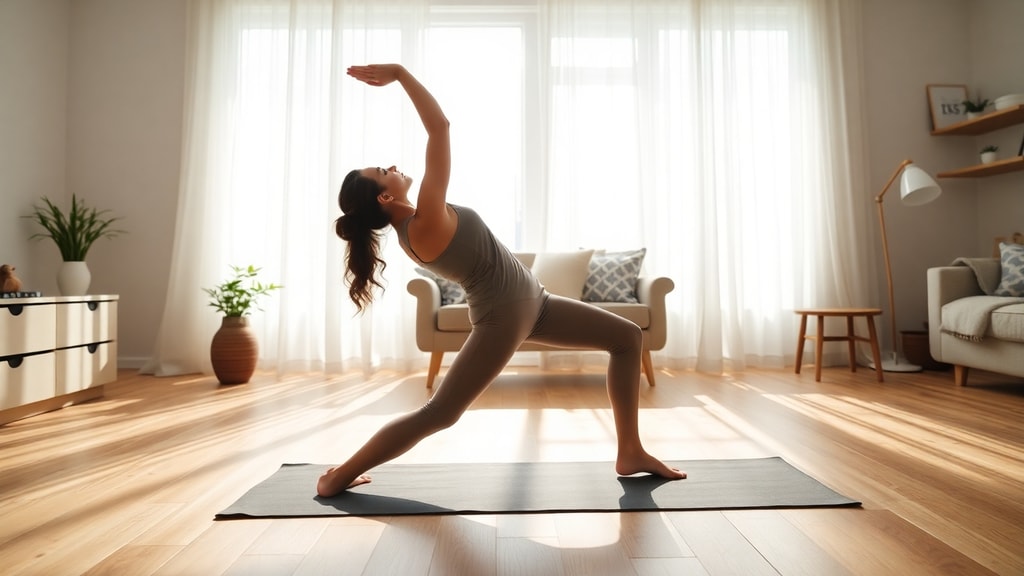
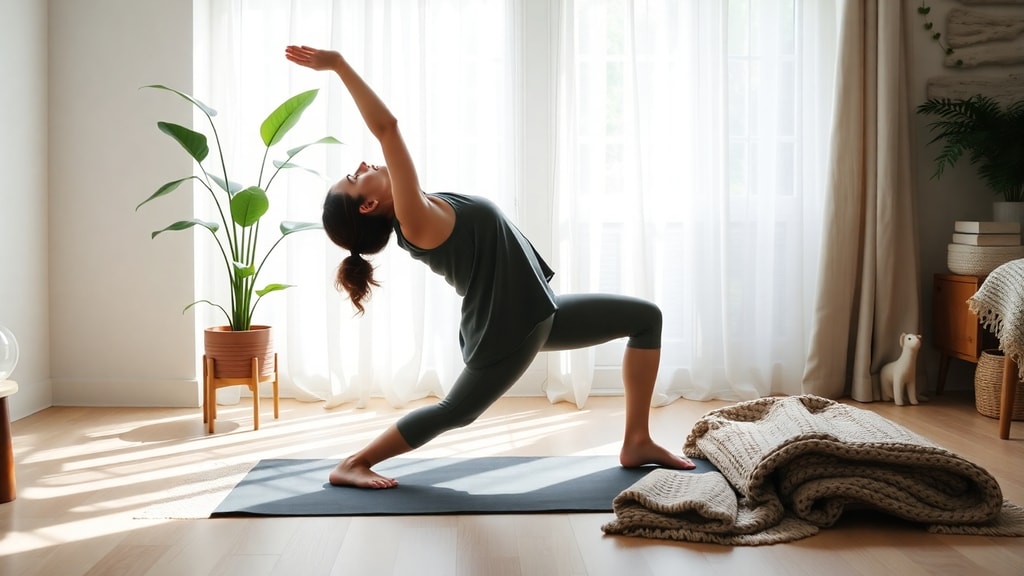
- Warrior I: Step one foot forward into a lunge, with your back foot turned out slightly. Bend your front knee to a 90-degree angle and raise your arms overhead. This pose builds strength in the legs, hips, and core.
- Tree Pose: Stand on one leg, place the sole of your other foot on your inner thigh or calf (avoid the knee), and bring your hands to your heart or overhead. This pose improves balance and focus.
- Seated Forward Fold: Sit with your legs extended in front of you, hinge at your hips, and reach for your feet or shins. Keep your spine long and breathe deeply to stretch the hamstrings and lower back.
- Corpse Pose (Savasana): Lie flat on your back with your arms at your sides and legs relaxed. Close your eyes and breathe naturally for 5 to 10 minutes. This final relaxation pose integrates the benefits of your practice and calms the mind.
Guided Resources for Beginners
If you feel unsure about how to sequence these poses or maintain proper form, guided resources can be incredibly helpful. Free YouTube channels and apps provide step-by-step instruction for beginners. For example, Yoga with Adriene offers a wide range of classes that emphasize alignment and breath. Another popular option is the Down Dog app, which allows you to customize session length, difficulty, and focus areas. These tools give you the structure of a class while allowing you to practice at home.
When following a guided video, resist the urge to skip ahead or push through discomfort. Pause the video if you need extra time in a pose or want to adjust your alignment. The goal is to learn at your own pace, not to complete a workout perfectly. Over time, you will become familiar with the poses and transitions, making it easier to practice independently. Remember that even experienced yoga practitioners revisit beginner videos to refine their technique.
Focus on Breathing Techniques
One of the most important elements of yoga is the breath. In home practice, it is easy to forget to breathe deeply when concentrating on movement. However, slow and deep breathing, known as pranayama, is what distinguishes yoga from simple stretching. Breathing with awareness helps maintain calm, controls movement, and prevents injury. A basic technique is to inhale through your nose for four counts and exhale through your nose for four counts. Coordinate your breath with each movement: inhale to extend, exhale to fold or twist.
As you progress, you can explore other breathing exercises such as alternate nostril breathing or ujjayi breath (ocean breath). These techniques deepen the mind-body connection and enhance the relaxing effects of yoga. If you ever feel dizzy or short of breath, return to natural breathing and reduce the intensity of the pose. The breath is your anchor; it tells you when to push forward and when to ease back. Make breathing the foundation of every home practice session.
Safety Tips to Prevent Injury
Home yoga is safe when you practice mindfully, but injury can happen if you neglect proper form or push too hard. Always warm up before your main practice. A few minutes of gentle neck rolls, shoulder shrugs, and cat-cow stretches prepare your muscles and joints. Listen to your body and avoid forcing poses, especially in the knees, hips, spine, and neck. These areas are vulnerable to strain if you overstretch or use incorrect alignment.
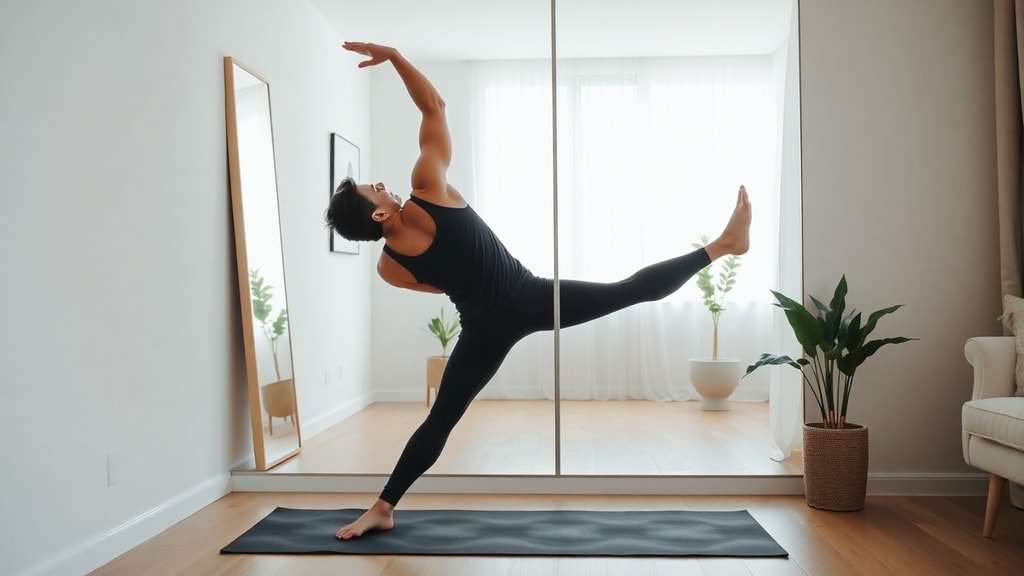
If a pose causes sharp pain, stop immediately and rest. It is normal to feel mild discomfort from stretching, but pain is a warning sign. Use props like blocks, pillows, or towels to modify poses. For example, sitting on a folded blanket in seated forward fold can protect your lower back. Many beginners benefit from practicing near a wall for balance support in standing poses. Gradually increase the depth of poses over weeks, not during a single session. The principle of non-violence, or ahimsa, applies to your own body. Be kind to yourself and respect your limits.
Benefits of Consistent Home Practice
When you practice home yoga regularly, the benefits extend beyond the mat. Studies indicate that yoga can significantly reduce cortisol levels, the hormone associated with stress. This leads to improved sleep quality, lower anxiety, and a more stable mood. Physically, even a simple routine strengthens core muscles, improves posture, and increases joint mobility. Many beginners report that after a few weeks, they feel more energetic and less prone to aches from sitting at a desk.
Below is a table summarizing the key benefits of home yoga for beginners, based on research and expert recommendations.
| Benefit | Description |
|---|---|
| Stress Reduction | Lowers cortisol levels and promotes relaxation through breathwork and gentle movement. |
| Improved Flexibility | Increases range of motion in muscles and joints, reducing stiffness and risk of injury. |
| Muscle Strength | Builds strength in core, legs, arms, and back through weight-bearing poses. |
| Better Sleep | Calms the nervous system, helping individuals fall asleep faster and sleep more deeply. |
| Cognitive Function | Enhances focus, memory, and mental clarity through mindful movement and breathing. |
| Convenience | Eliminates travel time and costs, making it easier to maintain a regular practice. |
Building a Routine That Sticks
Starting a home yoga practice is one thing; maintaining it is another. To build a lasting routine, keep your sessions short and enjoyable. Even 15 minutes of yoga every day is more effective than an hour once a week. Choose a time that fits naturally into your day, such as right after waking up or before dinner. Set a reminder on your phone or mark your calendar. Another strategy is to combine yoga with another habit you already have, like stretching after your morning coffee.
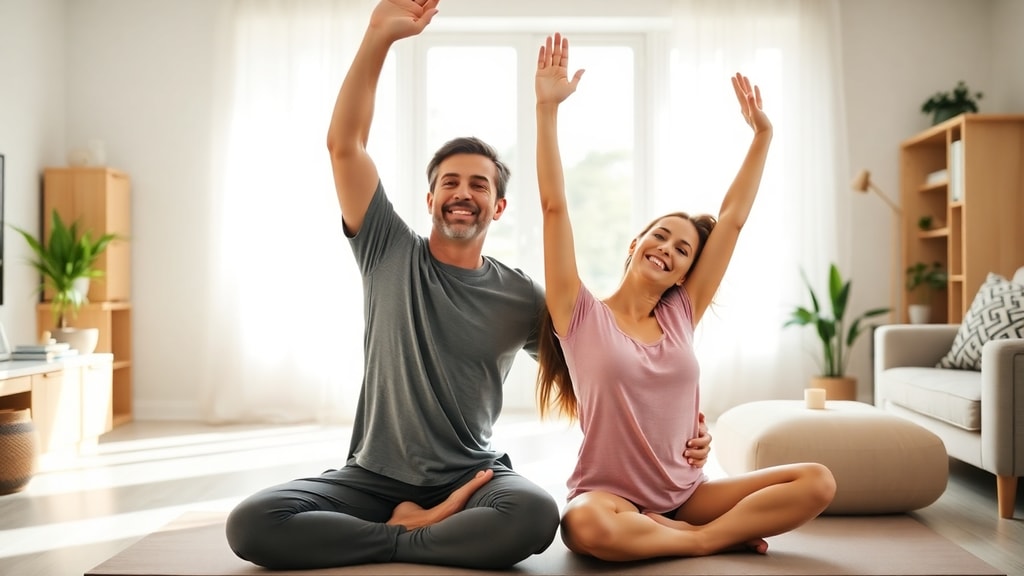
Track your progress in a simple journal or app. Note how you feel after each session, any new poses you tried, or areas of tightness. This reflection helps you stay motivated and see improvements over time. If you miss a session, do not give up. Just return to your mat the next day. Home yoga is forgiving because it is private and low-pressure. The most important thing is to show up for yourself, even if it is only for a few minutes.
For more guidance on creating a home practice, consider checking resources from Folha Vitoria which offers practical advice on how to get started safely. Additionally, articles from Runmefit provide insights into the ideal frequency and duration for beginners.
References
Estado de Minas. “Começar ioga pode ser mais simples do que parece.” Available at: https://www1.folha.uol.com.br/equilibrio/2023/05/porque-comecar-a-fazer-ioga-e-uma-boa-decisao-para-a-saude-fisica-e-mental.shtml. Accessed 2025.
Folha Vitória. “Tudo sobre yoga: para que serve, no que ajuda e como fazer em casa.” Available at: https://www.folhavitoria.com.br/saude/tudo-sobre-yoga-para-que-serve-no-que-ajuda-e-como-fazer-em-casa-viral/. Accessed 2025.
Runmefit. “Descubra 20 Treinos em Casa: Por que o Yoga é ótimo para iniciantes.” Available at: https://runmefit.com/pt-pt/blog/descobre-20-exercicios-em-casa-20-5-porque-e-que-o-ioga-e-otimo-para-principiantes/. Accessed 2025.
Clare Verde. “Yoga em casa: entenda como a prática influencia na saúde física e mental.” Available at: https://www.folhavitoria.com.br/saude/tudo-sobre-yoga-para-que-serve-no-que-ajuda-e-como-fazer-em-casa-viral/. Accessed 2025.
Santander (PT). “Yoga: conheça os seus benefícios e como começar a praticar.” Available at: https://www.santander.pt/salto/yoga-beneficios. Accessed 2025.
Blog Yogini. “Como fazer Yoga em Casa: um Guia Completo.” Available at: https://blog.yogini.com.br/como-fazer-yoga-em-c. Accessed 2025.